Why Regional Identity Matters in Premium Tea Exports
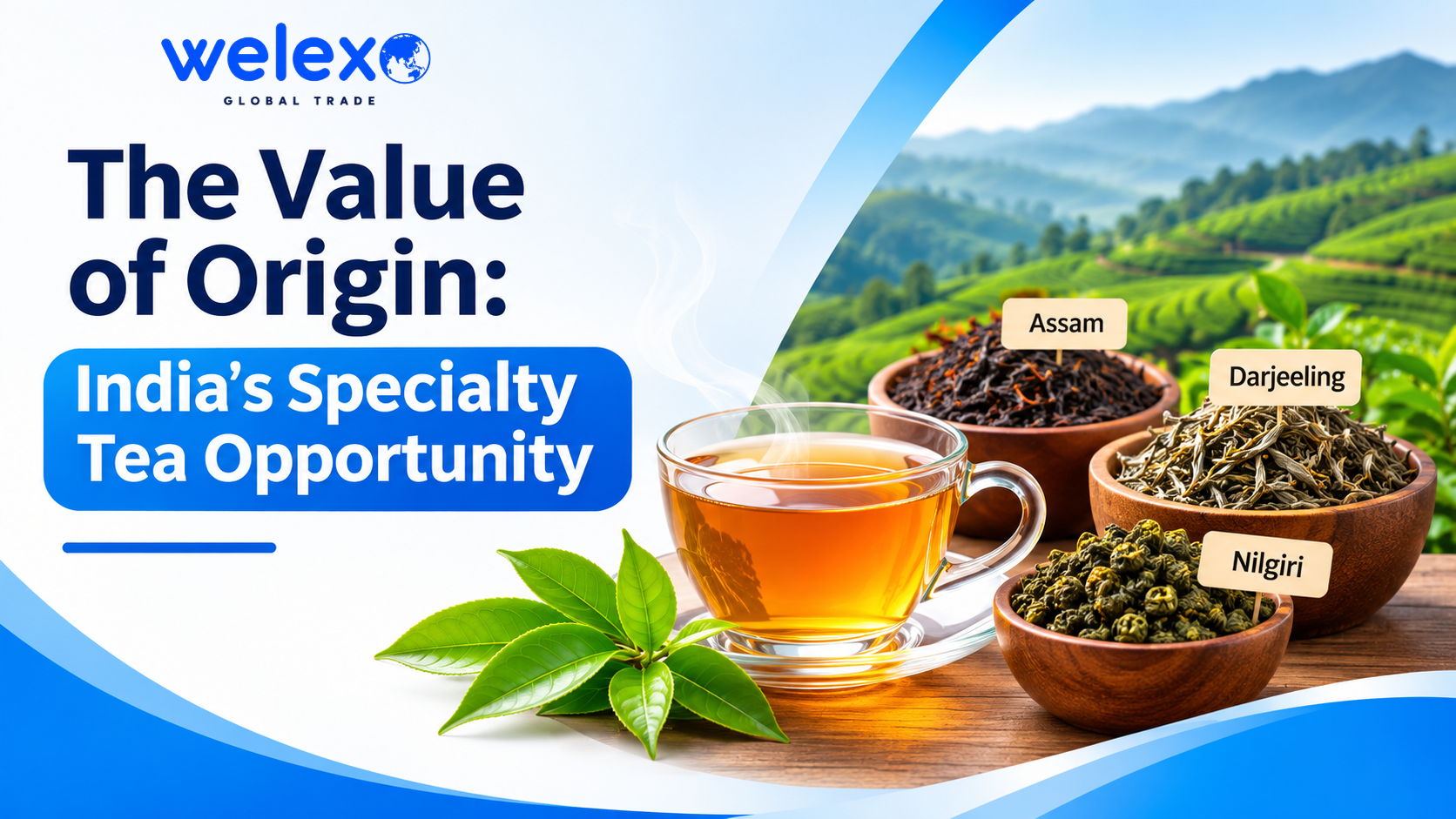
Not all tea tastes the same, and that difference can create business opportunities in international markets. India's tea-growing regions produce varieties with distinct aromas, flavours and characteristics. For exporters, these regional identities can become valuable selling points when approaching premium tea buyers.
India's tea industry has also achieved a significant export milestone. According to the Ministry of Commerce, the country exported a record 282.11 million kg of tea worth ₹8,718.83 crore in FY 2025–26, reflecting a 7% increase in export volume over the previous year.
Source: Government of India – Tea Sector Records Historic Export Performance.
What Makes Indian Tea Distinctive?
India offers several regional tea varieties, each with its own characteristics:
-
Darjeeling: Recognised for its distinctive aroma and muscatel character.
-
Assam: Known for its strong, full-bodied and malty flavour.
-
Nilgiri: Appreciated for its floral aroma and clear liquor.
-
Kangra: Offers a distinctive flavour and aromatic profile.
-
Sikkim: Known for its niche organic tea production.
These differences allow exporters to position products for specific buyer preferences instead of competing only on price.
Who Buys Premium and Specialty Tea?
Regional identity and product characteristics can appeal to different international business segments, including:
-
Specialty tea retailers and boutique brands.
-
Premium hotels, cafés and hospitality businesses.
-
Tea blenders looking for distinctive ingredients.
-
Private-label tea companies.
-
Importers and distributors serving high-value retail markets.
For these buyers, factors such as origin, flavour consistency, processing method, quality and product presentation can influence purchasing decisions.
What Should Exporters Highlight to International Buyers?
A strong export proposal should communicate more than the product name. Suppliers should be prepared to explain:
-
Origin and variety: Where the tea is grown and what makes it distinctive.
-
Quality specifications: Grade, flavour profile, moisture level and processing details.
-
Certifications: Applicable quality, food safety and organic certifications.
-
Packaging: Bulk, retail-ready or private-label options.
-
Supply capability: Available quantities, consistency and delivery timelines.
Clear product information helps buyers assess whether a tea supplier matches their sourcing requirements.
Turning Regional Tea Identity into Export Opportunities
Premium tea businesses can explore opportunities by identifying importers that specialise in particular varieties, researching their existing suppliers and understanding the products they source.
The Tea Board of India provides official industry information, export statistics and updates that can help businesses understand the sector.
Combining this research with company profiles, buyer-seller information and shipment trends can help exporters build a more focused international sales strategy.
Frequently Asked Questions
1. Which Indian teas are recognised in international markets?
Darjeeling, Assam, Nilgiri and Kangra are among India's recognised regional tea varieties.
2. Who are potential buyers of specialty Indian tea?
Specialty tea retailers, boutique brands, tea blenders, premium hospitality businesses and international distributors are potential buyer segments.
3. Why does tea origin matter in international trade?
Origin can influence flavour characteristics, product positioning and buyer preferences, helping suppliers differentiate their offerings in competitive markets.
Find New International Opportunities with Welexo
A distinctive product deserves the right market and the right business connections. Welexo helps businesses explore verified buyer and seller information, company profiles, shipment trends and competitor intelligence to support smarter international trade decisions.
Visit www.welexo.com and explore opportunities to take Indian tea to new markets.