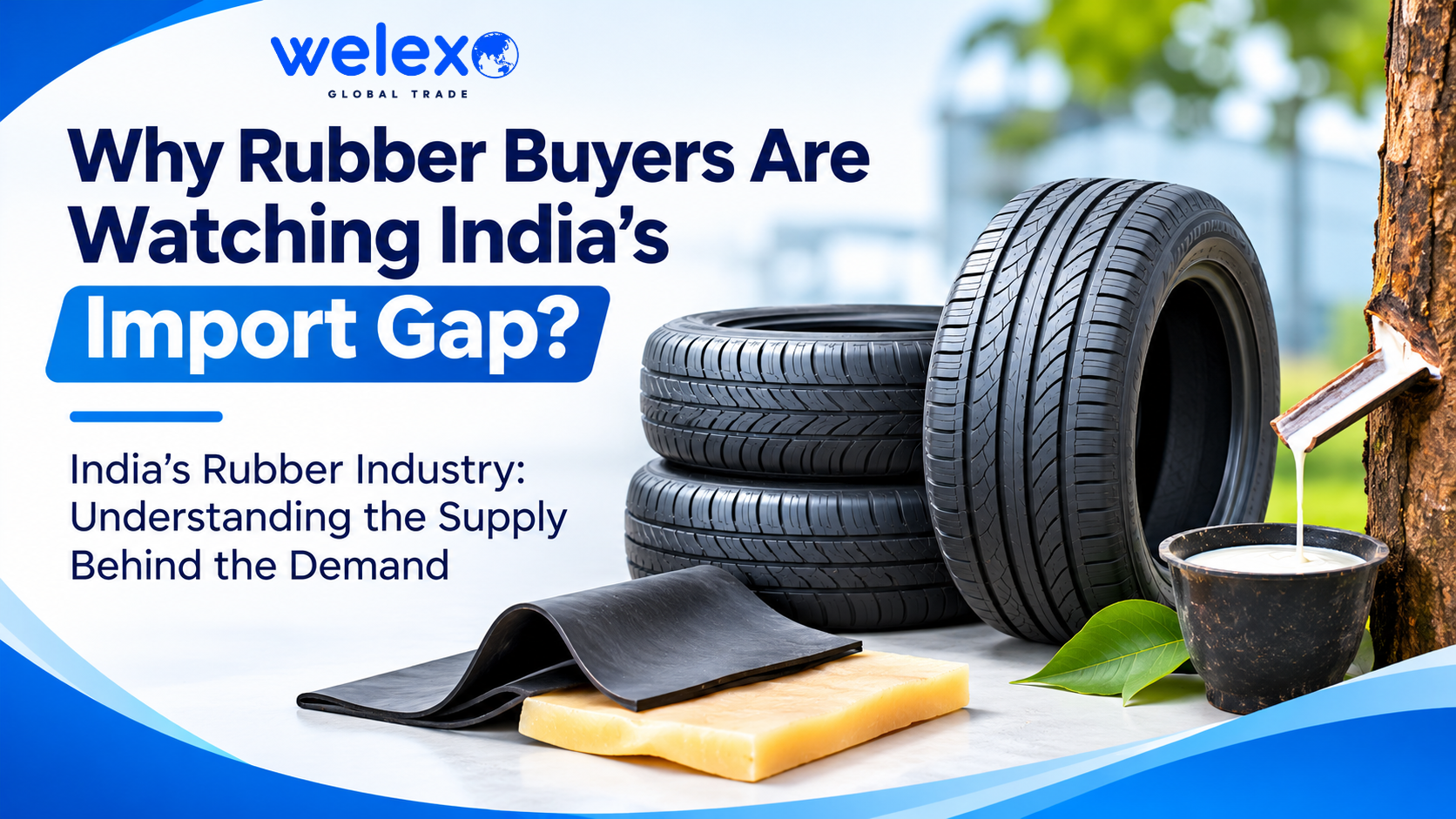
India's Rubber Industry: Understanding the Supply Behind the Demand
Rubber is an essential raw material for tyre manufacturing, footwear, industrial components and several other industries. For businesses that depend on a steady supply, understanding where rubber comes from—and how much a market needs to import—can make sourcing decisions more informed.
India offers an interesting example. Its natural-rubber consumption is considerably higher than domestic production, creating an important role for international suppliers.
India's Natural Rubber Supply at a Glance
According to figures submitted by the Government of India to the Rajya Sabha, India produced 8.75 lakh tonnes of natural rubber and consumed 14.10 lakh tonnes in 2024–25. Natural rubber imports during the same year stood at 5.51 lakh tonnes.
The difference between domestic production and consumption highlights the scale of the supply requirement. For overseas suppliers and Indian manufacturers, these figures offer useful context when evaluating sourcing opportunities.
Source: Government of India – Rajya Sabha, Production and Import of Rubber.
What Is Shaping International Rubber Supply?
The natural-rubber market is influenced by more than manufacturing demand. Weather conditions in producing regions, availability of raw material, shipping costs and changing purchase requirements can all affect supply.
The Association of Natural Rubber Producing Countries (ANRPC), in its September 2026 report, projected global natural-rubber production of 15.039 million tonnes and demand of 15.356 million tonnes for 2026. These are industry projections, not final annual figures.
Source: ANRPC – September 2026 Natural Rubber Market Report.
What Should Rubber Importers and Exporters Research?
Before entering a new market or choosing a supplier, businesses should examine:
-
Country-wise trade activity: Understand which countries are active in rubber imports and exports.
-
Product classification: Separate natural rubber, synthetic rubber and rubber-based articles instead of treating them as one category.
-
Supplier markets: Compare sourcing countries and identify potential suppliers.
-
Trade movement over time: Review changing import and export patterns before making procurement decisions.
For international comparisons, businesses can explore UN Comtrade, which provides official country-reported import and export statistics by commodity and trading partner.
Make Your Next Rubber Trade Decision with Better Research
A promising market is not identified by demand alone. Businesses also need to understand supply availability, sourcing locations, competitors and product-level trade activity.
Welexo helps importers, exporters and manufacturers explore global trade insights through country analysis, HS Code research, company profiles, buyer-seller information and competitor intelligence.
Explore new markets with Welexo.
Connect Worldwide. Trade Confidently. Grow Globally. Trust Every Step.
Frequently Asked Questions
1. Why does India import natural rubber?
India's domestic natural-rubber consumption exceeds its production, so imports help meet the requirements of its manufacturing industries.
2. Which information should rubber importers research before sourcing?
Importers should examine product specifications, HS Codes, supplier countries, historical trade activity and applicable import requirements.
3. Where can businesses check international rubber trade statistics?
They can use UN Comtrade for country-reported commodity trade information and the Indian Rubber Board for Indian rubber-sector publications.