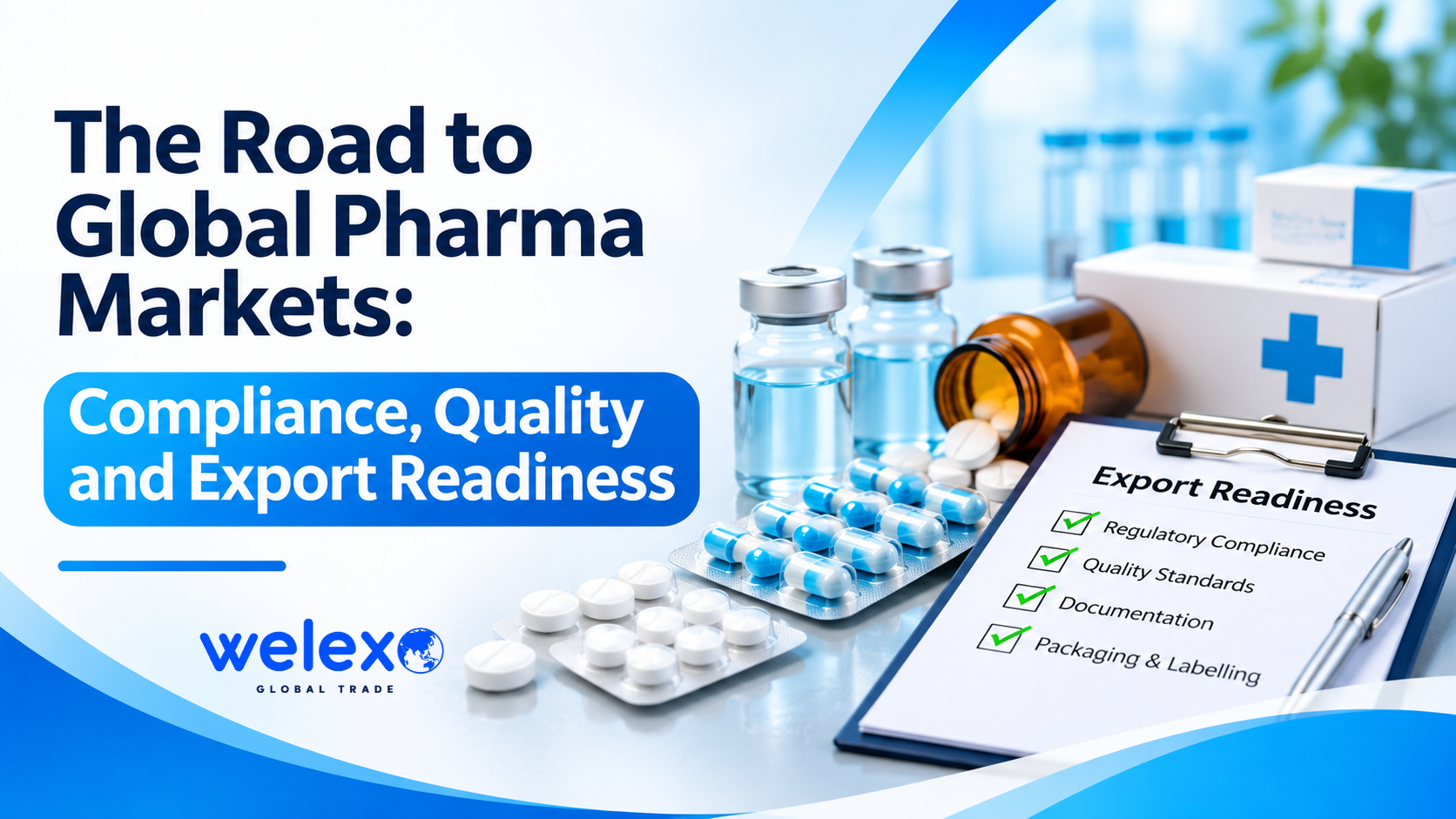
The Road to Global Pharma Markets: Compliance, Quality and Export Readiness
Taking pharmaceutical products into international markets requires more than manufacturing medicines and finding overseas buyers. Exporters must understand regulatory expectations, maintain product quality and prepare the right documentation for each destination.
For Indian pharmaceutical manufacturers, export readiness begins well before the first shipment. A clear understanding of market-specific requirements can help businesses avoid unnecessary delays and build confidence with international buyers.
1. Understand the Rules of Your Target Market
Every country has its own pharmaceutical regulatory framework. Product registration, import permissions, labelling rules and manufacturing requirements can differ between destinations.
Before entering a market, exporters should identify the relevant regulatory authority and confirm the requirements for their specific product.
The Central Drugs Standard Control Organization (CDSCO) provides official guidance, including information on export-related regulatory procedures.
2. Make Quality a Priority
International buyers need confidence that pharmaceutical products meet the required quality standards. Manufacturers should maintain appropriate quality systems throughout production and testing.
Important areas include:
-
Good Manufacturing Practices (GMP).
-
Raw material verification and quality control.
-
Batch testing and product specifications.
-
Stability and shelf-life information.
-
Proper storage and handling procedures.
Quality consistency is not only a regulatory consideration; it can also influence long-term buyer relationships.
3. Keep Export Documentation Ready
Documentation requirements depend on the product and importing country. Depending on the shipment, exporters may need to prepare:
-
Manufacturing and product licences.
-
Certificate of Analysis (CoA).
-
Free Sale Certificate, where applicable.
-
Certificate of Pharmaceutical Product (CoPP), where required.
-
Product specifications and technical documents.
-
Commercial invoice, packing list and shipping documents.
For certain unapproved, banned or new drugs manufactured solely for export, specific CDSCO procedures and permissions may apply. Exporters should check the relevant guidance before proceeding.
Official CDSCO guidance documents.
4. Plan Packaging, Labelling and Product Handling
A product may meet manufacturing requirements but still face difficulties if its packaging or labelling does not satisfy destination-country rules.
Exporters should check language requirements, product information, batch details, storage instructions and shelf-life declarations. Temperature-sensitive products may also require suitable storage and transportation arrangements.
The CDSCO Guidelines on Good Distribution Practices offer useful official reference material for pharmaceutical distribution.
5. Find Buyers Who Match Your Product
Regulatory readiness should go hand in hand with international buyer research. A manufacturer producing generic formulations, active pharmaceutical ingredients or specialised medicines should focus on buyers whose business requirements match its product portfolio.
Before approaching potential customers, research:
-
Their pharmaceutical product categories.
-
Their importing and sourcing markets.
-
Their business profile and purchasing activity.
-
Their product specifications and documentation expectations.
-
Their suitability for a long-term supply relationship.
This makes international outreach more focused and helps exporters identify commercially relevant prospects.
How Regulatory Preparation Supports Global Growth
Entering a new pharmaceutical market requires planning, reliable quality systems and an understanding of local regulations. Businesses that prepare these areas early can approach international opportunities with greater confidence.
For official updates on pharmaceutical export procedures, manufacturers can also refer to the Pharmaceuticals Export Promotion Council of India (Pharmexcil).
Frequently Asked Questions
1. What should Indian pharmaceutical exporters check before shipping medicines?
They should review destination-country regulations, product approvals, manufacturing requirements, quality standards, documentation, packaging and import conditions.
2. Are pharmaceutical export requirements identical across countries?
No. Requirements vary by product category and destination. Exporters should verify the applicable rules with the relevant regulatory authorities.
3. Which documents may be required for pharmaceutical exports?
Depending on the product and market, documents may include manufacturing licences, Certificates of Analysis, product approvals, Free Sale Certificates, CoPP and commercial shipping documents.
Explore Global Pharmaceutical Business Opportunities with Welexo
Being export-ready is one part of international growth. Finding relevant buyers and understanding their sourcing requirements is equally important.
Welexo helps businesses explore verified buyer and seller information, company profiles, shipment trends and competitor intelligence to support informed global trade decisions.
Visit www.welexo.com to explore international business opportunities.